





TOUR OPTIONS
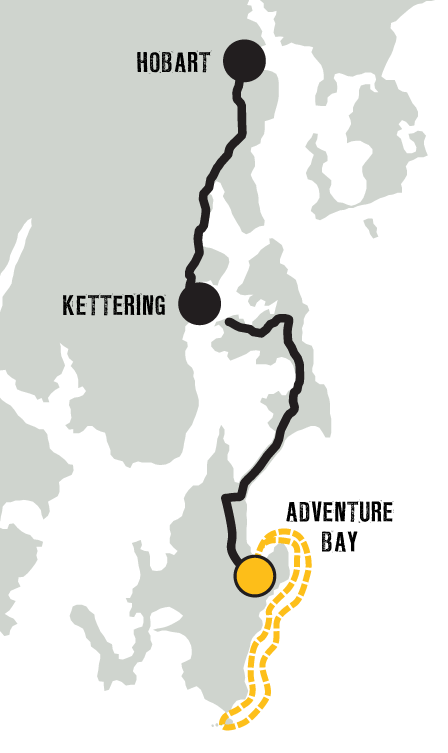
The cruise departs daily from Adventure Bay on Bruny Island.
You can drive yourself to Adventure Bay, or take our bus from Kettering or Hobart.
The Cruise
The cruise departs daily from Adventure Bay on Bruny Island. If you have your own car, you can drive yourself to Adventure Bay and join the cruise.
Cruise Times
10:00am Cruise (1 December to 28 April)
Catch 7:10, 7:50 or 8:10 Ferry from Kettering
Check in by 9:30am, Cruise 10am to 1pm approximately
11:00am Cruise (All Year)
Catch 7:50, 8:50 or 9:10am Ferry from Kettering
Check in by 10.30am, Cruise 11am to 2pm approximately
1:30pm Cruise (1 December to 28 April)
Catch 10:30, 10:50, 11:10 or 11:30 Ferry from Kettering
Check in by 1pm, Cruise 1:30pm to 4:30pm approximately
Getting There
From Hobart, you'll need to drive 45 minutes south to the Bruny Island Ferry Terminal in Kettering. The Bruny Island Ferry is operated by SeaLink. We suggest arriving at the ferry terminal 30 minutes prior to the ferry departure. The SeaLink ferry crossing takes 15-20 minutes and once you're on Bruny Island, it's a 40 minute drive south to our visitor centre at 1005 Adventure Bay Road, Adventure Bay. Click here for Maps, Driving Directions and Bruny Island Ferry times.
Morning Tea & Lunch
Food is not included in the tour price. Guests are welcome to bring their own food, or morning tea/lunch can be purchased from our Bruny Island Cruises Restaurant.
Important Information
Make sure you dress warmly for the cruise - warm jackets, scarves, beanies and gloves are recommended. And don't forget your camera!
Tours operate daily except Christmas Day, however bookings are essential as places are subject to availability. Bookings are subject to our Terms and Conditions.
If you are feeling unwell or display flu-like symptoms then you should not travel on our cruises. We would encourage you to contact us and cancel your booking.
For information about accessibility, download our Accessibility Guide.
Our Flexible Cancellation Policy
If you book directly with us, we have a very flexible cancellation policy:
- No cancellation fees if you need to cancel due to COVID right up to the time of departure. This includes if you are unwell or if you have to change your travel plans due to flight changes or travel restrictions. We will happily move your booking to another day or provide you with a full refund. Please note you need to advise us prior to departure so that we have an opportunity to re-sell the seats.
- For non-COVID related cancellations our normal cancellation policy applies. We reserve the right to charge 100% for cancellations within 24 hours of departure. Bookings are fully flexible up to 24 hours prior to the tour departure.
Please note that if you book through a third-party website or travel agent, they each impose their own cancellation policies and restrictions.
Duration
3 Hours Approximately
Operates
Daily, except Christmas Day
Departs From
1005 Adventure Bay Road
Adventure Bay
Bruny Island
View on Map
Prices
Adult $175
Child (3-16 yrs) $105
Family $540
(2 adults, 3 children)
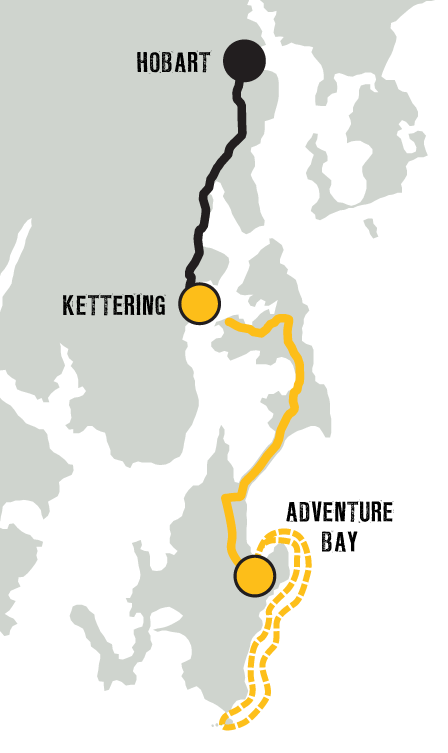
3 Hour Cruise + Bus from Kettering
Leave your car at Kettering and catch our daily tour bus, which joins up with the 3 Hour Wilderness Cruise.
Arrive by 8.30am to meet the bus at the Oyster Cove Marina in Kettering, where there is free parking available. The tour includes the 3 Hour Wilderness Cruise, SeaLink ferry crossing and commentary from one of our local guides.
Itinerary
08:30am - Arrive at our Kettering Meeting Point (Oyster Cove Marina)
09:00am - SeaLink Ferry Crossing
10:30am - Arrive at Adventure Bay
11:00am - 3 Hour Wilderness Cruise
02:00pm - Cruise concludes
03:15pm - Bus departs for return journey
04:30pm - Ferry crossing
04:45pm - Arrive Kettering
Morning Tea & Lunch
Food is not included in the tour price. Guests are welcome to bring their own food, or morning tea/lunch can be purchased from our Bruny Island Cruises Restaurant.
Important Information
Make sure you dress warmly for the cruise - warm jackets, scarves, beanies and gloves are recommended. And don't forget your camera!
Tours operate daily except Christmas Day, however bookings are essential as places are subject to availability. Bookings are subject to our Terms and Conditions.
During the COVID-19 pandemic we will not allow guests to join our tours if we believe they are unwell. If you are feeling unwell or display flu-like symptoms we would encourage you to contact us and cancel your booking. Full refunds are available for customers who cancel due to illness or travel restrictions during the Coronavirus pandemic.
For information about accessibility, download our Accessibility Guide.
Our Flexible Cancellation Policy
If you book directly with us, we have a very flexible cancellation policy:
- No cancellation fees if you need to cancel due to COVID right up to the time of departure. This includes if you are unwell or if you have to change your travel plans due to flight changes or travel restrictions. We will happily move your booking to another day or provide you with a full refund. Please note you need to advise us prior to departure so that we have an opportunity to re-sell the seats.
- For non-COVID related cancellations our normal cancellation policy applies. We reserve the right to charge 100% for cancellations within 24 hours of departure. Bookings are fully flexible up to 24 hours prior to the tour departure.
Please note that if you book through a third-party website or travel agent, they each impose their own cancellation policies and restrictions.
Duration
8¼ Hours Approximately
(8:30am - 4:45pm)
Operates
Daily, except Christmas Day
Departs From
Oyster Cove Marina
Kettering
View on Map
Prices
Adult $190
Child (3-16 yrs) $120
Family $600
(2 adults, 3 children)
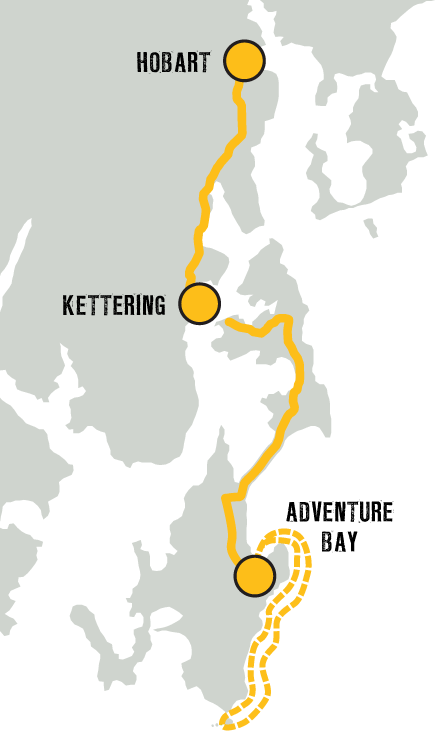
Full Day Tour from Hobart
Why not join our Full Day Tour from Hobart for the ultimate Bruny Island Cruises experience. Your day includes return guided bus tour, SeaLink ferry crossing, 3 Hour Wilderness Cruise, morning tea, lunch and commentary from our local guides.
Itinerary
07:45am - Departs from Pennicott Wilderness Journeys Booking Centre
09:00am - SeaLink Ferry crossing
10.30am - Morning Tea at Adventure Bay
11:00am - 3 Hour Wilderness Cruise
02:00pm - Cruise concludes, Lunch
03:15pm - Bus departs for return journey
04:30pm - Ferry crossing
05:30pm - Arrive Hobart, hotel drop-off
Departure Point
The Full Day Tour departs from the Pennicott Wilderness Journeys Booking Centre. This is situated on Hobart's waterfront on Franklin Wharf, next to the Constitution Dock Lifting Bridge. This is a short walk or taxi ride from most Hobart CBD hotels. Please check-in ready for a 7.45am departure.
If you have your own car, we don't have any parking available. There is all-day parking available nearby at the Evans Street Car Park or Market Place Car Park - click here for more information.
Morning Tea & Lunch
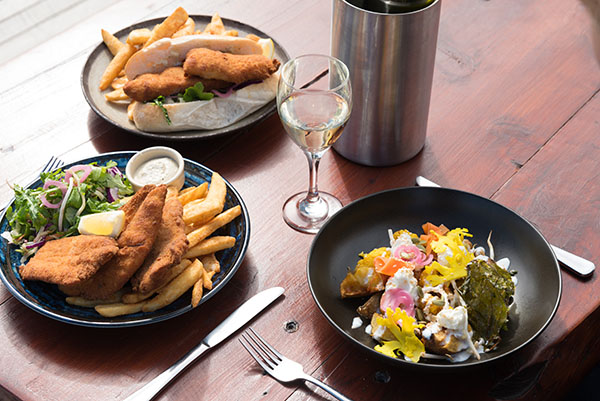
Your day includes morning tea and lunch served at our Bruny Island Cruises Restaurant. Morning tea is a freshly baked blueberry muffin and a hot/cold drink. For lunch you can enjoy premium fish & chips, or delicious homemade pumpkin soup and a gourmet salad roll with your choice of Tasmanian Salmon or local ham. Gluten free & vegetarian options available. Click here for more details.
Important Information
Make sure you dress warmly for the cruise - warm jackets, scarves, beanies and gloves are recommended. And don't forget your camera!
Tours operate daily except Christmas Day, however bookings are essential as places are subject to availability. Bookings are subject to our Terms and Conditions.
During the COVID-19 pandemic we will not allow guests to join our tours if we believe they are unwell. If you are feeling unwell or display flu-like symptoms we would encourage you to contact us and cancel your booking. Full refunds are available for customers who cancel due to illness or travel restrictions during the Coronavirus pandemic.
For information about accessibility, download our Accessibility Guide.
Our Flexible Cancellation Policy
If you book directly with us, we have a very flexible cancellation policy:
- No cancellation fees if you need to cancel due to COVID right up to the time of departure. This includes if you are unwell or if you have to change your travel plans due to flight changes or travel restrictions. We will happily move your booking to another day or provide you with a full refund. Please note you need to advise us prior to departure so that we have an opportunity to re-sell the seats.
- For non-COVID related cancellations our normal cancellation policy applies. We reserve the right to charge 100% for cancellations within 24 hours of departure. Bookings are fully flexible up to 24 hours prior to the tour departure.
Please note that if you book through a third-party website or travel agent, they each impose their own cancellation policies and restrictions.
Duration
9¾ Hours Approximately
(7:45am - 5:30pm)
Operates
Daily, except Christmas Day
Departs From
Pennicott Wilderness Journeys
Dock Head Building
Franklin Wharf
Hobart TAS 7000
View on Map
Prices
Adult $265
Child (3-16 yrs) $195
MORE INFORMATION
Let us help you to make the most of your visit to Bruny Island.
FAQs
We recommended booking a few days ahead as our boats are often full and you may be disappointed if you chance to just turn up on the day. We are flexible with bookings so it is not a problem if you decide to change to another day or cancel, whatever the reason. No fee is charged for cancellations before the cruise date (so long as you contact us).
Our boats are designed to suit the coastline along which we travel and we will certainly make the most of any weather conditions. Our bookings are fully flexible so if you decide the weather on the day is not for you, you can give us a call and we can change your reservation to a different day. Our staff are upfront about the weather and you are welcome to contact us a day or two ahead to get an honest indication of the forecasted weather. Of course, in Tasmania the weather can at times be a little surprising and so a forecast is exactly that, a forecast!
Being in open ocean, sea sickness can be an issue for a small number of people. We have had 13 years experience in dealing with this and have developed some very effective techniques to minimise the chance of sea sickness occurring.
We offer all-natural Travel Calm Ginger tablets to everyone when they step onboard. This product has proven extremely effective in preventing sea sickness in most people. Our staff can also suggest a number of things to further assist in minimising the chances of any sea sickness symptoms:
- Selecting a seat in the back third of the boat (there is a lot less movement up the back of the boat)
- Keeping your body temperature on the cooler side
- If you wear glasses or sunglasses keep the lenses clean at all times
- Avoid looking through cameras, binoculars etc
- Stay away from acidic foods before the cruise such as Orange Juice and coffee
We do emphasise that communication is the key - if you have any concerns please let our staff know.
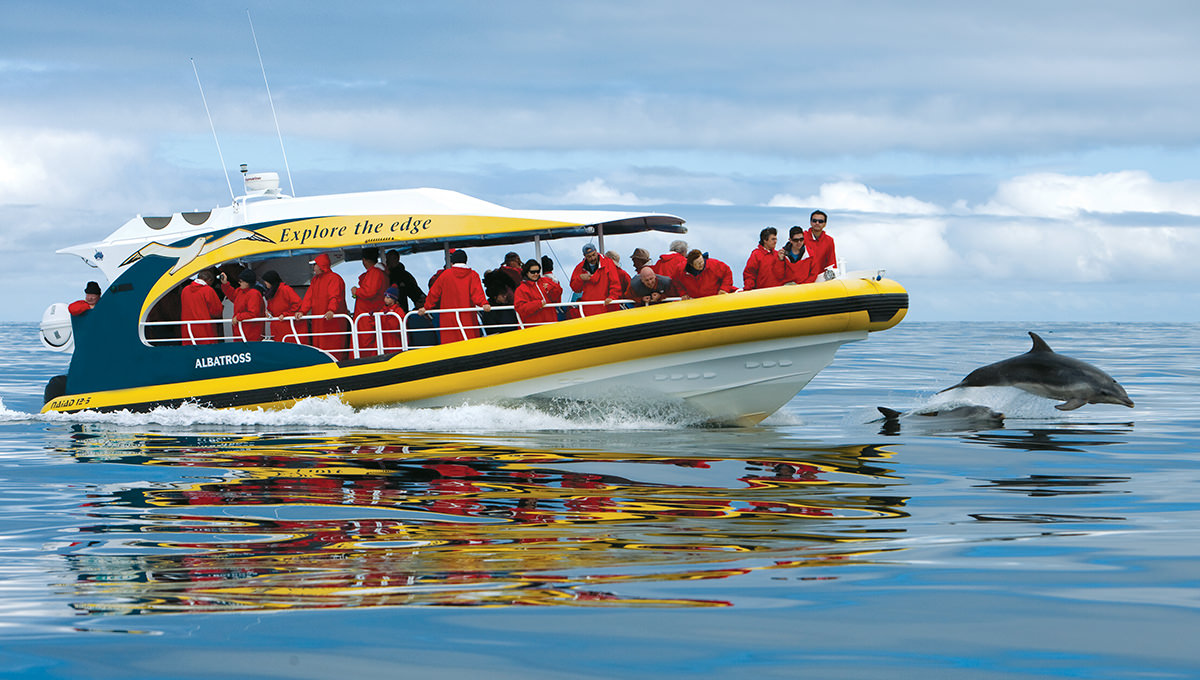
It is important that you are adequately dressed because it is cold on the boats, even in summer. Warm jackets gloves, scarves & beanies are a good idea. We provide wet weather jackets which go over the top of your clothing, but we encourage you to bring a few warm layers of your own.
Generally Yes. The road from the Ferry Terminal to our Booking Centre in Adventure Bay is fully sealed - there is no need to travel on any gravel roads. There is a short ferry crossing, which is not normally a concern for hire car companies. If you are concerned, we suggest confirming with your hire car company whether there are any restrictions. Alternatively, you can always join our Kettering Bus Pick Up Service.
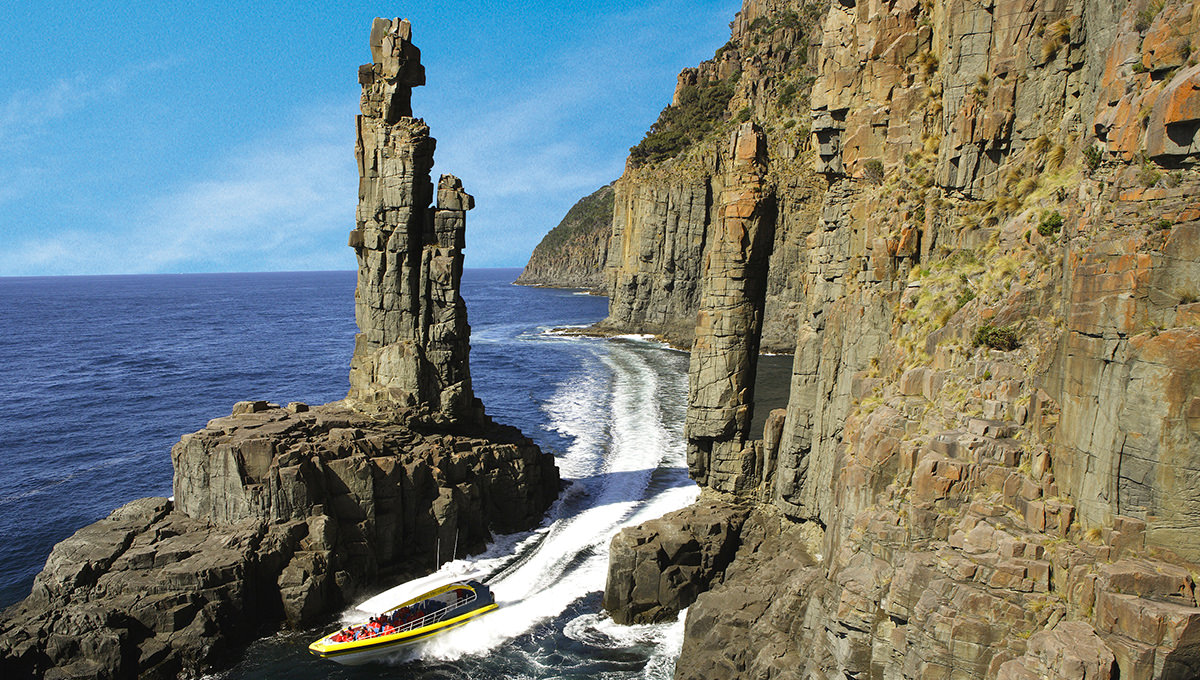
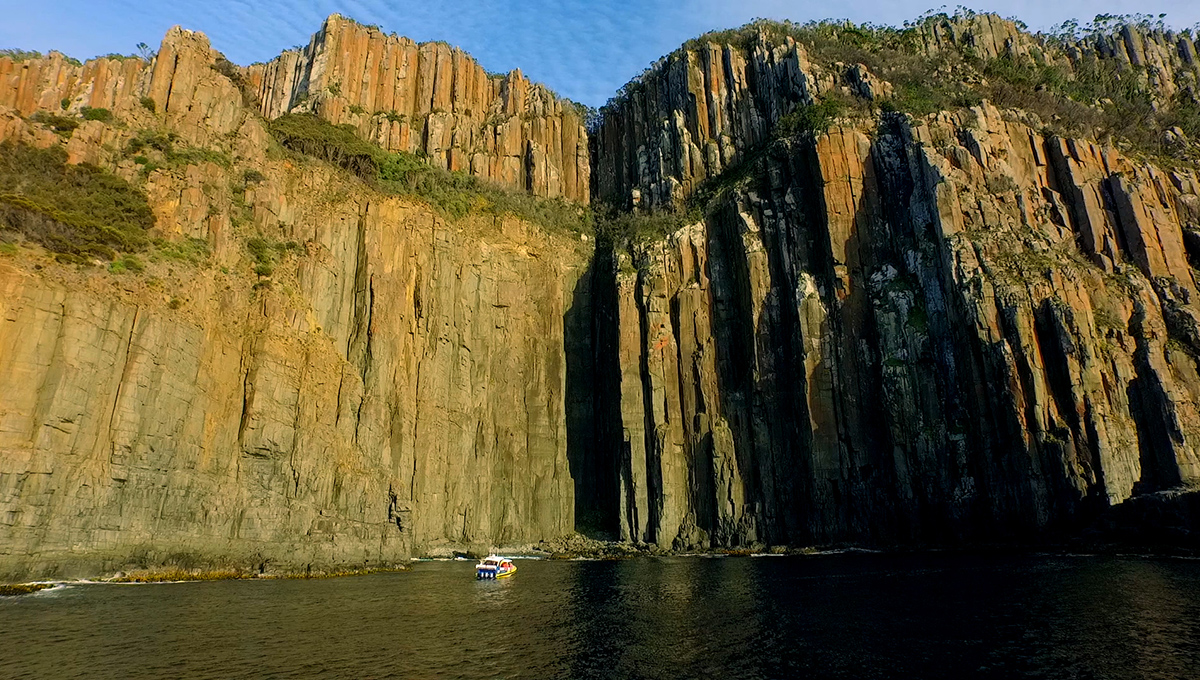
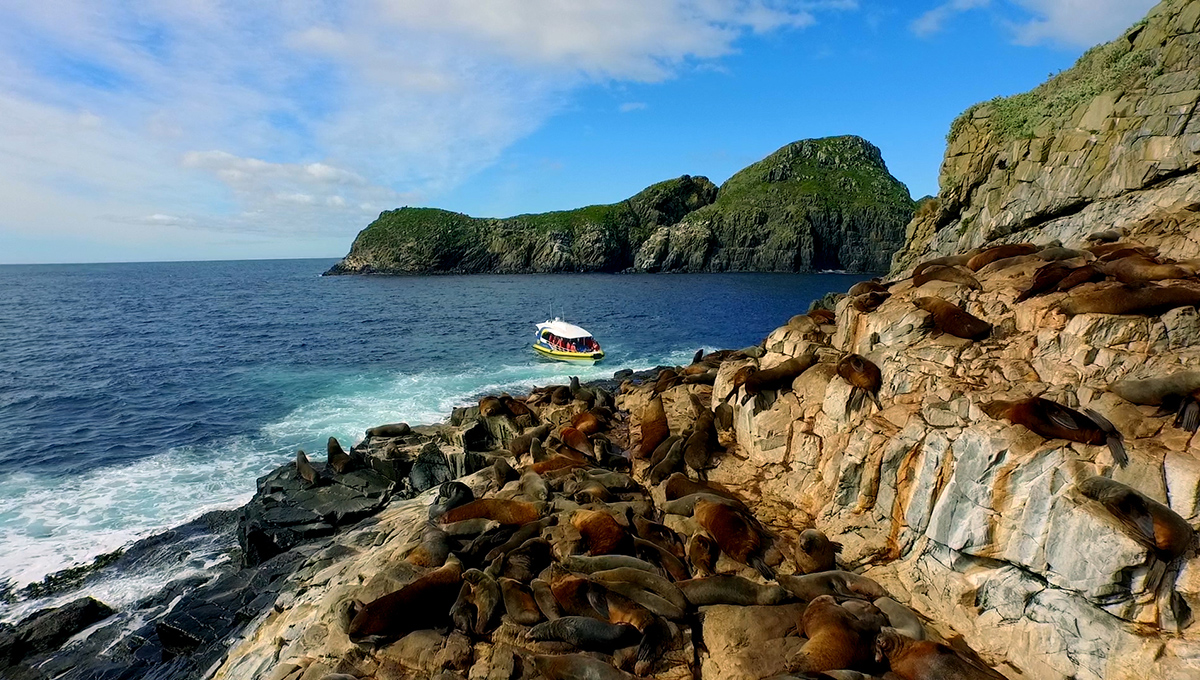
Children of all ages are welcome aboard our boats and we take many children along on our cruises. As parents you are probably the best judge as to how your children will cope with being out on the water for 3 hours, but we have found that the majority of children enjoy the experience and love seeing the amazing wildlife, huge cliffs and caves along the Bruny coastline.
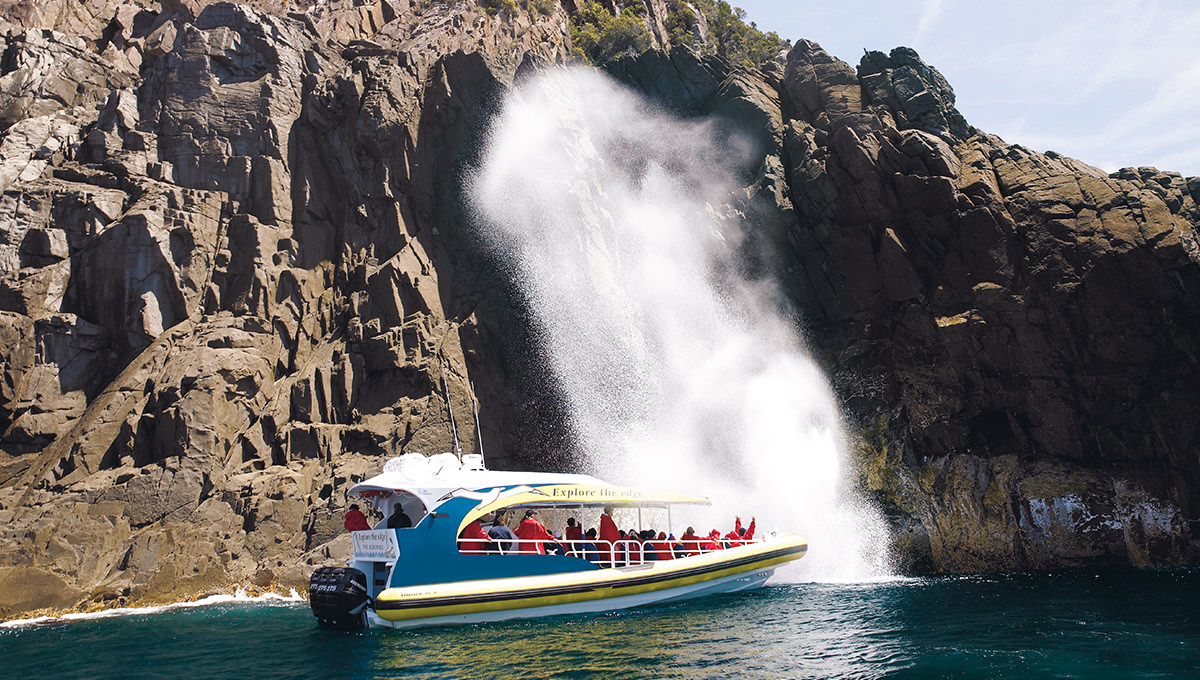
For the majority of days the cruise is quite suitable for pregnant women and we have had lots do our trip. Our boats are custom built for the coastline that we cruise along. They are able to cut through chop and therefore we can avoid the bumping of waves that some boats experience. It is a good idea to take into account the weather conditions on the day of the cruise as this will effect comfort levels for someone who is heavily pregnant. You can contact us a day or two ahead to get a weather report for the day of your cruise and we are happy to move or cancel bookings if it is not looking suitable for you.